Control valves
Control valves are valves used to regulate the flow, pressure, temperature, or level of a fluid in a process system by varying the size of the flow passage. They are essential components in industrial automation and process control, allowing precise control of process variables to maintain desired operating conditions.
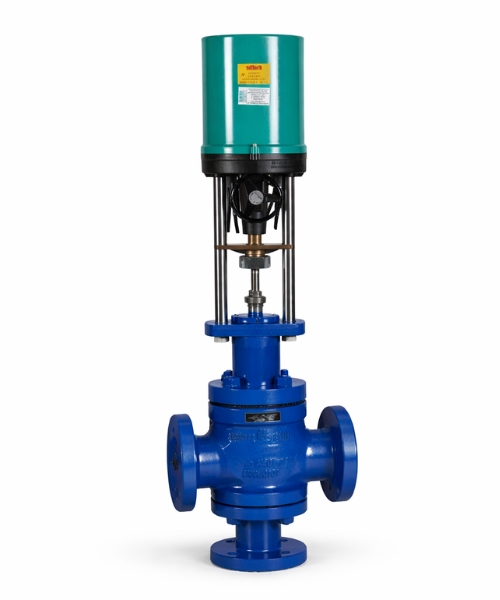
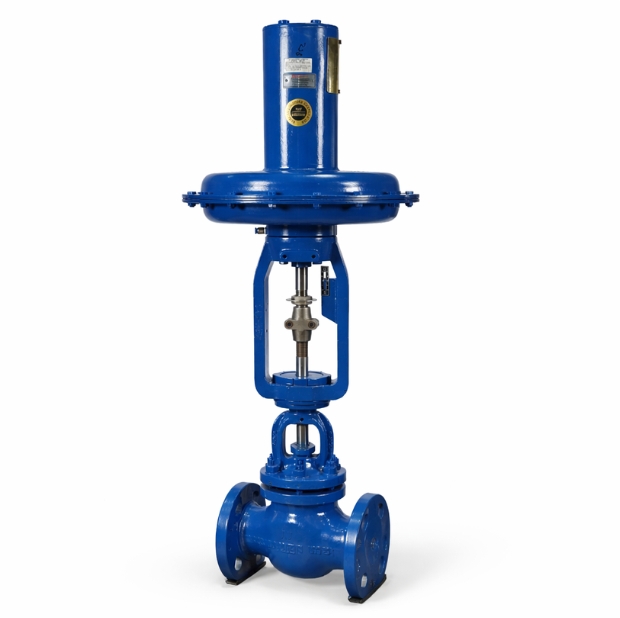
A control valve consists of a valve body, actuator, and a positioner:
The valve body contains the flow passage and the closure element (such as a plug, ball, or disc).
The actuator provides the force to move the closure element and can be pneumatic, hydraulic, or electric
The positioner ensures the valve reaches the desired position according to the control signal.
Control valves operate automatically in response to signals from a control system, adjusting the flow to maintain set process conditions. They are used in oil and gas, chemical, power, water treatment, and HVAC industries, among others, for tasks like pressure regulation, flow control, temperature control, and level maintenance.
These valves can be classified into various types based on their construction or operation, such as globe valves, ball valves, butterfly valves, diaphragm valves, and angle valves, each chosen depending on the application requirements.