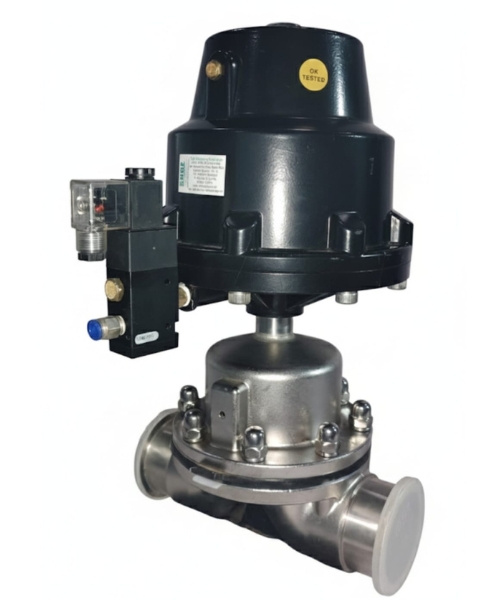
Angle Valve
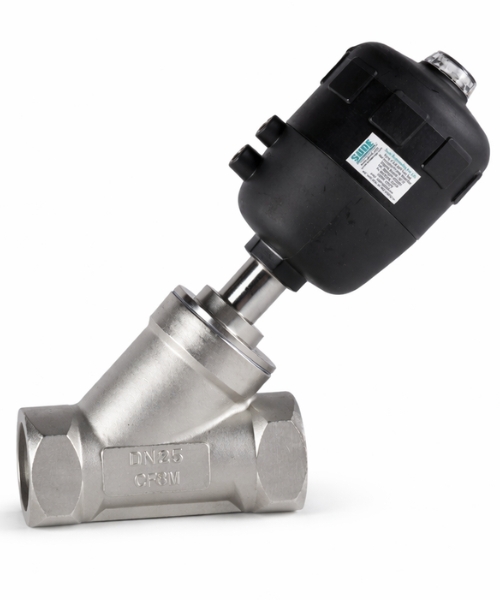
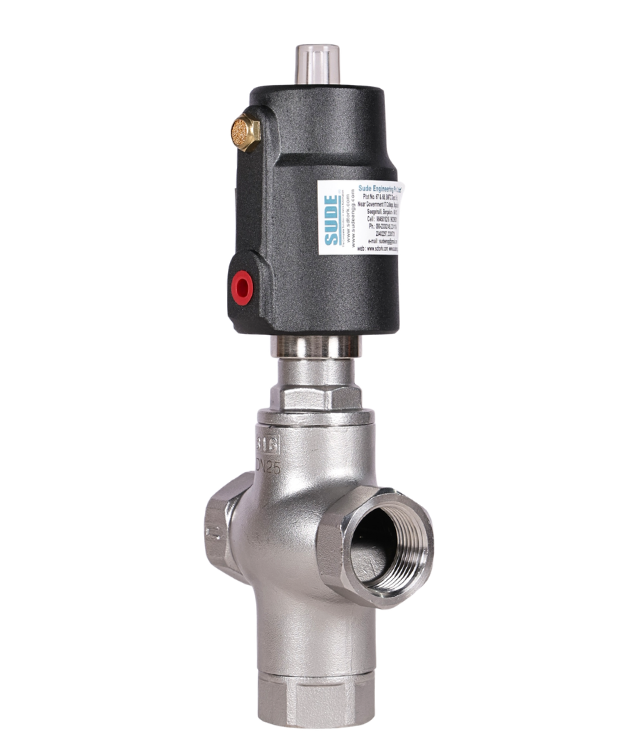
An angle valve is specifically designed to regulate or automate the liquid flow in on-off mode and regulating mode. Generally it is used for water, hot water, steam, medicine, chloroform and many more applications where automation is king. Unlike straight-through valves, an angle valve has its inlet and outlet ports arranged at a right angle (90 degrees) to each other, which allows it to redirect the fluid efficiently without requiring additional pipe fittings.
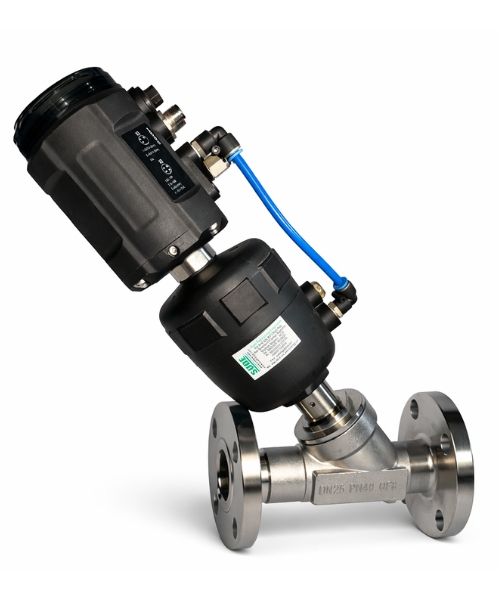
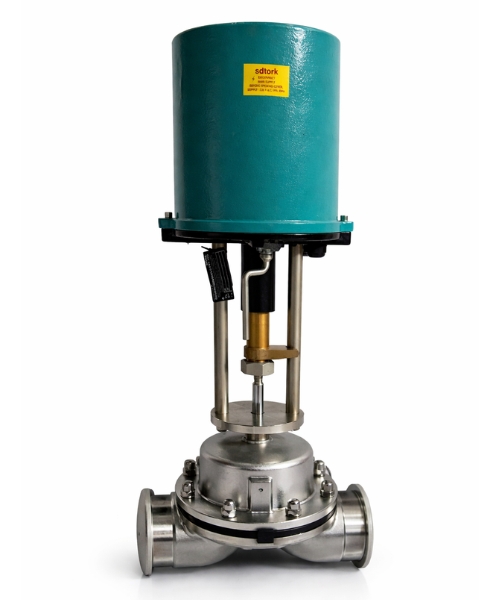
The valve typically consists of a body, bonnet, stem, and a closure element such as a disc, plug, or ball. When the valve is operated, the closure element moves to either allow fluid to pass through or block it, thereby controlling flow rate. Angle valves can be manually operated using a handwheel or lever, or they can be automated using pneumatic or electric actuators, depending on the system requirements.
These valves are commonly used in systems where space is limited or where a change in flow direction is required. They are suitable for a variety of fluids, including water, steam, gas, and chemicals, depending on the material of construction.
The construction of an angle valve allows it to handle moderate pressure and temperature conditions while providing reliable shut-off and flow control. Its design simplifies piping layouts by reducing the need for additional elbows or fittings, making it a practical choice for compact installations.