How Industrial Dampers Improve Plant Safety & Efficiency

- Industrial
- Feb 15, 2026
- 10 Views
How Industrial Dampers Improve Plant Safety & Efficiency
Introduction
In heavy industries like power generation, steel manufacturing, cement plants, and oil & gas facilities, airflow control is not just an operational requirement — it is a safety-critical function. Industrial dampers play a vital role in managing air, flue gases, dust, and high-temperature flow systems.
When designed and engineered correctly, industrial dampers improve plant safety, increase operational efficiency, and reduce maintenance costs. In this article, we’ll break down how dampers work, why they matter, and how choosing the right damper system can significantly impact plant performance.
What Are Industrial Dampers?
Industrial dampers are mechanical devices installed in ducting systems to regulate, isolate, or divert airflow and gases. They are widely used in:
• Thermal power plants
• Nuclear facilities
• Cement plants
• Steel and metal industries
• Petrochemical units
• Waste-to-energy plants
Unlike HVAC dampers, industrial dampers are built to withstand:
• Extreme temperatures
• High pressure conditions
• Dust-laden environments
• Corrosive gases
They are engineered for long-term reliability in harsh industrial environments
1️⃣ Improving Plant Safety
Fire & Explosion Control
In power plants and process industries, uncontrolled airflow can lead to fire hazards or pressure build-up. Dampers help isolate specific duct sections during emergencies, preventing fire and smoke from spreading across systems.
Emergency Shut-Off
Motorized and actuator-operated dampers can automatically close during system failures or emergency triggers. This protects equipment and personnel.
Pressure Regulation
Improper pressure balance can damage boilers, furnaces, and filtration systems. Industrial dampers maintain stable pressure levels to avoid system stress and failures.
2️⃣ Enhancing Energy Efficiency
Energy losses in industrial plants often occur due to poor airflow control. Properly engineered dampers:
• Optimize combustion air in boilers
• Control flue gas flow
• Reduce heat loss
• Improve fuel efficiency
Even small improvements in airflow management can result in significant annual energy savings for large plants.
3️⃣ Extending Equipment Life
High-temperature gases, abrasive dust, and pressure surges can damage ducts and process equipment.
Heavy-duty dampers:
• Reduce vibration impact
• Prevent backflow
• Control velocity
• Protect downstream components
This leads to lower maintenance costs and longer equipment lifespan.
4️⃣ Supporting Automation & Smart Control
Modern industrial dampers are designed to work with:
• Electric actuators
• Pneumatic actuators
• Hydraulic systems
This allows:
• Remote monitoring
• Automated regulation
• Integration with PLC/SCADA systems
• Real-time performance control
Automation reduces manual intervention and improves operational precision.
Types of Industrial Dampers
Depending on application, industries commonly use:
🔹 Butterfly Dampers
Ideal for flow regulation and isolation in medium-pressure systems.
🔹 Louver Dampers
Used where airflow modulation and fine control are required.
🔹 Guillotine Dampers
Best for high-temperature and heavy-duty isolation applications.
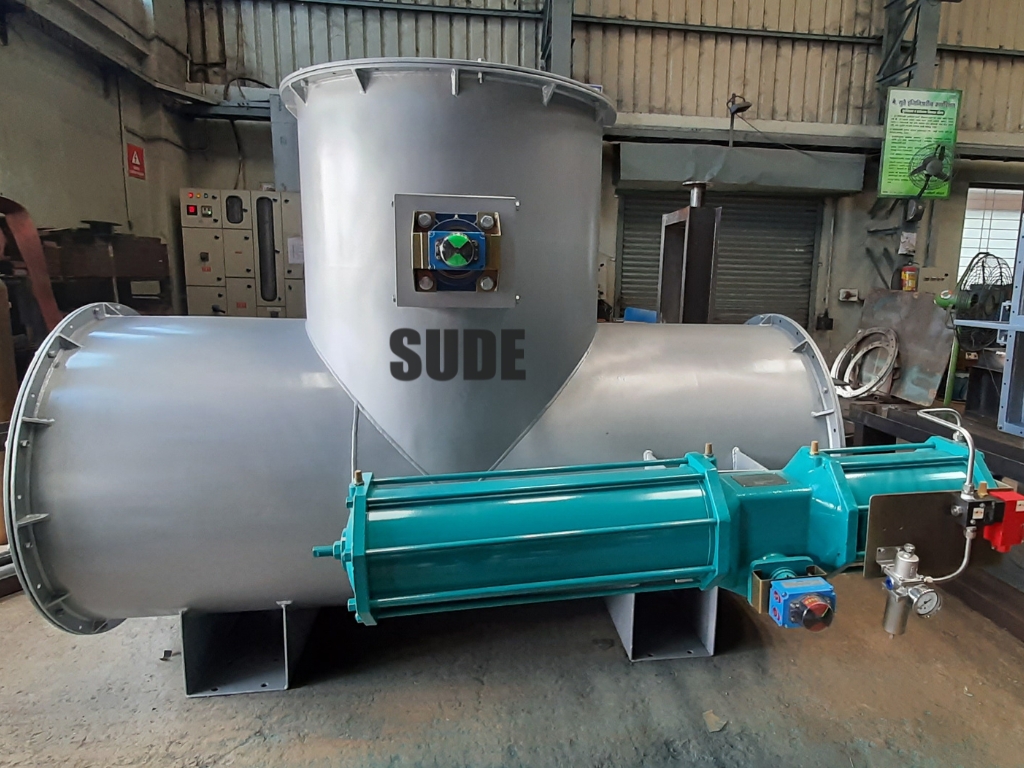
🔹 Diverter Dampers
Redirect airflow between multiple duct paths.
Each application requires proper sizing, material selection, and actuator compatibility.
Key Factors When Selecting an Industrial Damper
Choosing the wrong damper can result in leakage, operational inefficiency, or system failure. Important factors include:
• Operating temperature range
• Pressure rating
• Gas composition
• Dust load
• Required sealing class
• Actuation type (manual / electric / pneumatic)
• Maintenance accessibility
Engineering precision during design ensures long-term performance.
Applications Across Industries
Power Plants
Boiler isolation, flue gas control, and emission management.
Steel Plants
High-temperature exhaust systems and furnace airflow regulation.
Cement Industry
Dust handling and kiln exhaust systems.
Oil & Gas
Process isolation and safety systems.
Nuclear Facilities
Critical airflow control under strict safety standards.
Why Precision Engineering Matters
In industrial environments, dampers are not just metal blades inside ducts. They are critical safety and performance components.
Precision-engineered dampers ensure:
• Minimal leakage
• Accurate positioning
• High structural integrity
• Reliable operation under extreme conditions
This is where high-quality manufacturing and strict quality inspection processes become essential.
Conclusion
Industrial dampers are central to plant safety, energy efficiency, and operational reliability. Whether it’s isolating high-temperature ducts, preventing fire spread, or optimizing combustion airflow, the right damper system makes a measurable difference.
Investing in engineered damper solutions is not just about compliance — it’s about protecting infrastructure, improving performance, and ensuring long-term plant sustainability.
Related Posts